
The New Vape Duty Arrives April 2026: What It Means for the UK Vaping Industry
From 1 April 2026, the UK is introducing a significant new tax that will reshape the vaping landscape: the Vaping Products Duty (VPD). This vape duty will apply to all e-liquids — including nicotine-free products — and is set to influence pricing, compliance, and how vape businesses operate.
Whether you're a vape retailer, distributor, manufacturer, or consumer, this guide breaks down everything you need to know about the upcoming changes.
What Is the Vaping Products Duty (VPD)?
The Vaping Products Duty is a new excise duty designed to regulate the vaping market more closely and discourage non-smokers (particularly young people) from picking up vaping.
Key points of the Vape Duty:
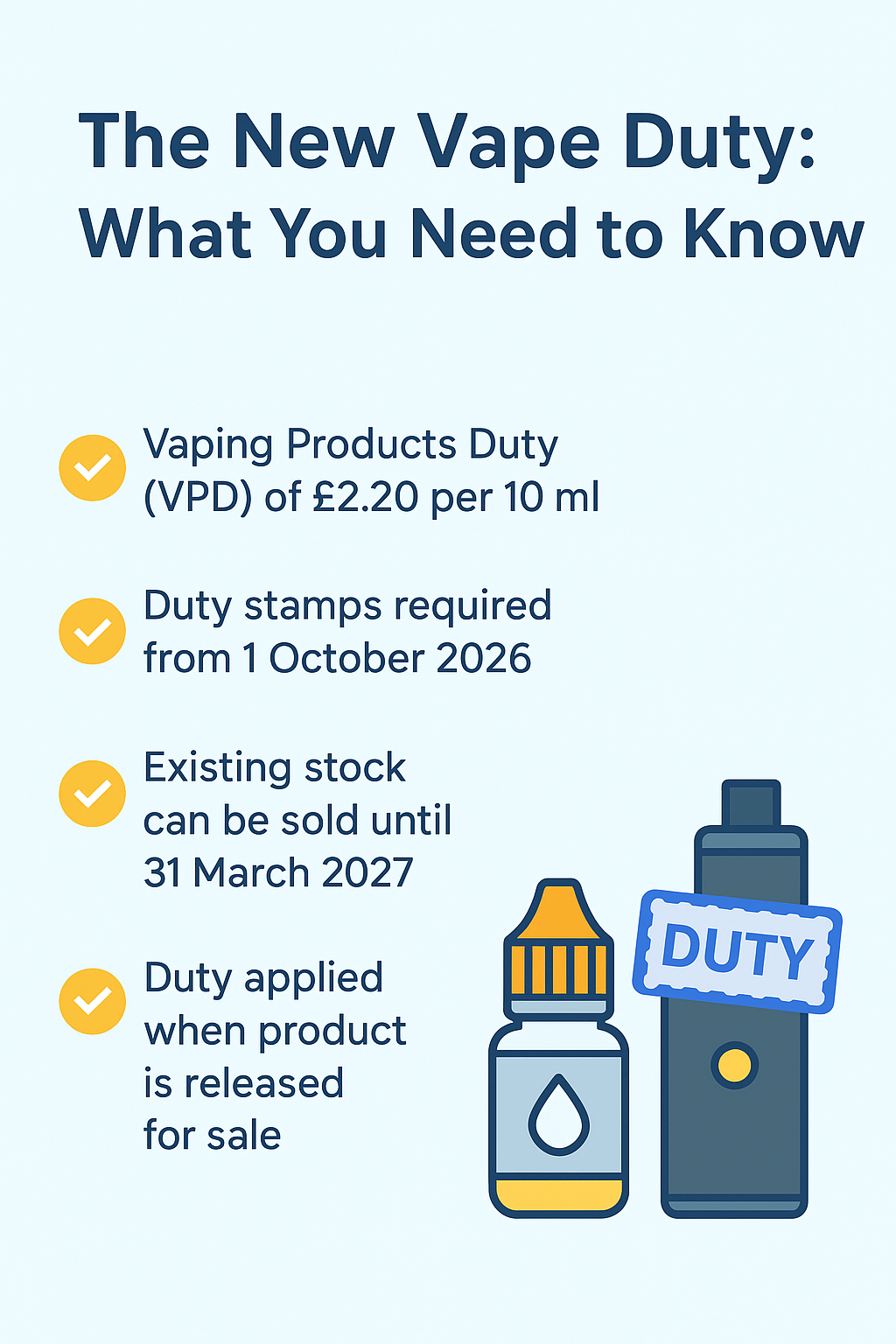
- A flat rate duty of £2.20 per 10 ml of e-liquid
- Applies to all e-liquids, with or without nicotine
- Duty becomes payable when the product is released for sale
- VAT still applies on top of the new duty
This duty is similar to how the UK already taxes alcohol and tobacco — making vaping part of a more formalised excise system.
Vaping Duty Stamps Scheme (VDS): New Compliance Rules for 2026–2027
Alongside the vape duty, the government is introducing Vaping Duty Stamps, a system similar to the stamps seen on tobacco packets.
What vape businesses need to know:
- 1 October 2026 — All vaping products for retail must carry a duty stamp
- Stamps must be applied in a way that seals the packaging, showing if a product has been tampered with
- A six-month grace period allows older stock to be sold until 31 March 2027
- From 1 April 2027, every retail product must carry a stamp — no exceptions
This is one of the biggest compliance shifts in the vaping market to date.
Who Must Register for the Vape Duty?
From 1 April 2026, several types of businesses must apply for HMRC approval:
- Vape manufacturers
- E-liquid producers
- Importers
- Warehouse keepers
- Anyone supplying unstamped products
The approval process can take up to 45 working days, so businesses are strongly advised to apply early to avoid delays or trading restrictions.
Why Is the UK Introducing a Vape Duty?
The government’s goals include:
1. Protecting Public Health
The vape duty is part of a wider effort to reduce youth vaping and curb the appeal of cheap, disposable products.
2. Increasing Regulation
Duty stamps and an excise structure allow HMRC to track products more effectively and reduce counterfeit or illegal imports.
3. Raising Revenue
Additional funds will support public services — including the NHS.
4. Supporting a Smoke-Free Generation
The vape duty aligns with the UK’s goal of dramatically reducing smoking rates for future generations.
How Will the Vape Duty Affect Businesses?
Increased costs & operational changes
Duty payments and stamp purchases will affect cash flow and margins — especially for smaller retailers and manufacturers.
Packaging updates
Products must be repackaged to allow stamp placement and anti-tamper sealing.
Stricter compliance
Businesses failing to comply risk:
- Fines
- Loss of trading approval
- Civil or criminal penalties
Impact on pricing
Most businesses are expected to pass some or all of the duty cost onto consumers.
How Will the Vape Duty Affect Consumers?
Higher prices
E-liquids are likely to rise in cost due to the duty.
Possible reduction in product choice
Some brands — especially lower-margin or budget options — may exit the market.
Better safety and traceability
Duty stamps may help reduce counterfeit products, improving consumer safety.
Potential risk of an illicit market
If prices increase significantly, cheap illegal vapes may become more appealing — something the government will need to monitor closely.
Key Vape Duty Dates to Remember
|
Date |
What Happens |
|
1 April 2026 |
Vape duty registration opens |
|
1 October 2026 |
Duty becomes payable; stamps required on retail products |
|
31 March 2027 |
Last day to sell unstamped stock |
|
1 April 2027 |
Every vaping product must carry a duty stamp |
Challenges & Criticisms of the New Vape Duty
Common concerns from within the industry include:
- Pressure on small businesses due to rising costs
- Risk of pushing vapers back to smoking if prices become too high
- Administrative burden on manufacturers and importers
- Emergence of illegal imports if enforcement is weak
Balancing public health and harm reduction remains a key challenge.
How Vape Businesses Can Prepare Now
If you're part of the vaping supply chain, here’s how to stay ahead:
- Review your pricing strategy to absorb or offset duty costs
- Prepare for HMRC approval well before 1 April 2026
- Update packaging and production workflows for duty stamps
- Use up existing stock before the grace period ends
- Educate customers about upcoming price changes
Being proactive will reduce disruption and protect your business once the duty arrives.
Final Thoughts
The new vape duty coming on 1 April 2026 marks a major shift for the UK vaping industry. While the changes aim to improve public health and market regulation, they bring challenges around pricing, compliance, and supply chain complexity.
For businesses, preparing early is essential. For consumers, expect some price increases but also potentially safer, better-regulated products.